
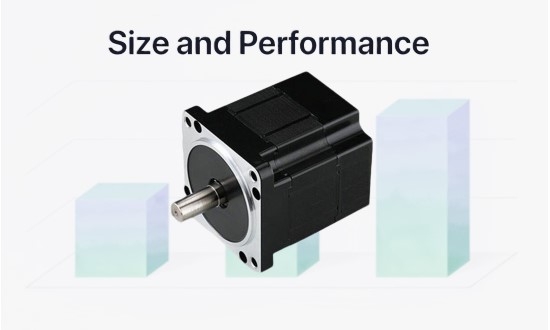
When choosing a brushless DC motor, one of the most crucial factors to consider is the size of the motor. The size of the motor directly influences its performance, including torque, speed, and efficiency. Understanding the relationship between motor size and performance can help you make better choices for your application, whether you're designing a robot, building an electric vehicle, or upgrading an appliance.
1. Motor Size: What Does It Mean?
Motor size generally refers to the physical dimensions of the BLDC electric motor, typically measured by the diameter and length of the stator (the stationary part of the motor). It’s important to note that motor size is not always synonymous with power. A smaller motor may still deliver significant power, depending on its design and technology, while a larger motor may be more efficient at handling higher loads.
Here’s how motor size impacts performance:
| Diameter | Length |
| A larger diameter typically means more room for winding coils, which can result in higher torque. | A longer motor can house more winding layers and thus provide greater power and higher torque over a longer period. |
2. Size and Torque
The torque of a BLDC motor is one of the most significant performance characteristics. Torque is the rotational force the motor can generate to drive a load, and it’s a direct result of the motor’s size.
| Smaller motors | Larger motors |
| Smaller motors have less torque capacity, but their advantage lies in their ability to operate in smaller, more compact spaces while still providing sufficient torque for light-duty applications. | Larger motors usually generate more torque because they have a larger surface area for the stator windings and magnets. The increased size allows for stronger magnetic fields, which can translate into higher torque output. |
In short, if you need a motor to handle heavy loads or operate continuously with high performance, opting for a larger motor with more torque may be necessary. However, if you're dealing with lightweight applications, such as a drone or a small fan, a smaller motor may suffice.
3. Size and Speed
The speed of a brushless DC motor, typically measured in RPM (revolutions per minute), is also affected by its size. Motor speed is determined by several factors, but the motor's size is key in understanding its rotational characteristics.
| Smaller motors | Larger motors |
| Smaller motors can often spin faster due to their lower inertia. The compact design means less mass to move, allowing for faster acceleration and higher RPMs. This is ideal for applications where high-speed operation is required, such as in small fans or drones. | Larger motors, on the other hand, tend to have a lower maximum speed but can maintain high speeds over longer periods due to their ability to handle more power and dissipate heat more efficiently. For example, larger motors are commonly used in electric vehicles or industrial machines, where high torque and consistent speed are needed rather than extreme RPM. |
4. Size and Efficiency
Motor efficiency refers to how effectively the motor converts electrical energy into mechanical energy. Efficiency is crucial, especially for applications that require long run times, like electric vehicles and home appliances.
| Smaller motors | Larger motors |
| Smaller motors can often be more efficient in low-power applications because they are optimized to minimize energy consumption while maintaining high speed. However, their efficiency may decrease under heavy load, as they are designed for lighter tasks. | Larger motors generally operate more efficiently under heavier loads, as they can better distribute the power and heat, reducing the risk of overheating. Larger motors often have better heat dissipation mechanisms, leading to longer operating lifespans and less risk of efficiency loss over time. |
If your application requires a BLDC motor to run for extended periods or handle heavy loads, a larger motor might provide better efficiency and durability over time.
5. Heat Management
Another crucial aspect of motor performance is heat dissipation. When a motor is running at high speeds or under load, it generates heat, and how well it handles that heat is vital for maintaining performance and longevity.
| Smaller motors | Larger motors |
| Smaller motors are more prone to overheating because they have less surface area to dissipate heat. While they may operate efficiently at low loads, running them at high speeds or under heavy loads can lead to thermal buildup, reducing their performance. | Larger motors generally have better thermal management due to their larger size. More space allows for better ventilation and the use of heat sinks, which help keep the motor cooler and more efficient over time. |
Choosing a larger motor can help avoid overheating issues, particularly in high-power applications where heat buildup is a concern.
6. Size and Cost
As with most things, the size of the motor also directly impacts its cost. Larger motors typically cost more, both in terms of materials and manufacturing complexity. However, this doesn’t necessarily mean they’re always a better choice.
| Smaller motors | Larger motors |
| Smaller motors are generally more affordable and are perfect for low-power applications, where high torque and speed aren’t essential. | Larger motors are more expensive but offer better overall performance and durability, making them ideal for industrial applications, electric vehicles, or high-torque requirements. |
If cost is a significant factor, and your application doesn’t require massive torque or long-term, high-efficiency operation, a smaller motor could be a more cost-effective solution.
7. Choosing the Right Motor Size
When deciding on the right BLDC motor size for your application, consider the following:
| Power Requirements | Space Limitations |
| How much torque and speed do you need for your specific task? Larger motors provide higher torque but might sacrifice speed, while smaller motors are faster but with less torque. | If space is tight, you may need to prioritize size over power. Small motors can fit into compact spaces without sacrificing too much performance. |
| Efficiency Needs | Budget Constraints |
| For applications that require extended operation or continuous running, a larger motor might be necessary to ensure efficient energy use and heat dissipation. | While larger motors are generally more expensive, they offer better long-term performance, especially for heavy-duty applications. |
Conclusion
In the world of BLDC motors, size matters, but it’s not the only factor that determines performance. Understanding the trade-offs between size, torque, speed, efficiency, and cost will help you make the best choice for your specific needs. By balancing these factors, you can ensure that your motor delivers the best performance for the task at hand, whether you’re building a robot, designing an electric vehicle, or upgrading an appliance.


