
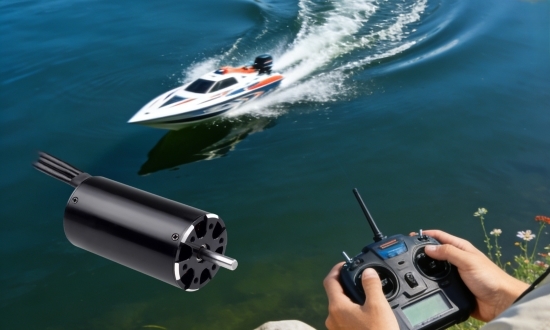
When it comes to remote-controlled (RC) boats, one of the most important components is the motor. The type of motor used can greatly affect the boat’s performance, longevity, and overall experience. In recent years, BLDC motors have become the go-to choice for RC boat enthusiasts. But why exactly do RC boats often prefer BLDC motors over traditional brushed motors? Let’s explore the key reasons behind this decision.
1. Higher Efficiency and Power Output
One of the main advantages of brushless DC motors is their superior efficiency. Unlike brushed motors, which rely on brushes to transfer electricity to the motor’s windings, BLDC electric motors use electronic controllers that allow for more efficient energy transfer. This means that BLDC motors generate more power from the same amount of input energy, making them ideal for RC boats where speed and performance are crucial.
In addition to this, BLDC motors have fewer internal friction losses compared to brushed motors, as they don’t have brushes that wear out over time. This results in better overall performance and energy conservation, allowing the boat to operate for longer periods before needing a recharge.
2. Greater Durability and Longevity
Because brushless DC motors don’t use brushes, they have fewer moving parts and are less prone to wear and tear. This significantly improves the longevity of the motor. For RC boat enthusiasts who want a reliable, long-lasting motor, BLDC electric motors are an excellent choice.
Brushed motors, on the other hand, suffer from brush wear and can eventually lose power as the brushes degrade. This can be frustrating for RC boat owners, especially when racing or participating in water-based activities, where reliability is key. The durability of BLDC motors helps eliminate this issue.
3. Lower Maintenance Requirements
Maintenance is a crucial factor for RC boat owners. With these motors, there is no need to worry about replacing worn-out brushes or dealing with the carbon dust that comes from brush friction. The absence of brushes means that BLDC motors require much less maintenance compared to their brushed counterparts. Simply put, they are more "plug and play."
This makes BLDC motors ideal for RC boats used in various conditions, including saltwater, where maintenance can be more challenging. The simplicity of keeping a brushless DC motor in good condition is a huge advantage for RC boaters.
4. Better Cooling and Heat Dissipation
RC boats operate in environments where heat can be an issue. Brushless DC motors tend to generate less heat because of their efficient design, which allows them to perform at higher speeds without overheating. In contrast, brushed motors tend to produce more heat due to the friction between the brushes and commutator, which can cause them to overheat and reduce their lifespan.
This is particularly important in RC boats, where the motor is often running at full power during races or extended usage. The efficient cooling capabilities of these motors ensure that they remain cooler for longer periods, which directly contributes to their overall durability and performance.
5. Precise Speed Control and Smooth Operation
BLDC motors are known for their smooth and precise operation. They allow for better speed control, which is crucial for achieving the desired performance in an RC boat. The electronic controller used in BLDC electric motors enables more accurate adjustments to motor speed and torque, offering a smoother throttle response.
This precision is especially important when navigating tight turns, racing, or handling rough water conditions. RC boat owners can enjoy a more responsive and enjoyable driving experience, with greater control over their boat’s movements.
6. Reduced Noise and Vibration
Another benefit of BLDC motors is the reduction in noise and vibration. Brushed motors tend to generate more noise due to the friction between the brushes and the commutator. This can not only affect the user experience but also make the boat less enjoyable to operate, especially in quiet or peaceful environments.
Brushless DC motors, however, operate more quietly and with less vibration. This is because they don’t have brushes that create friction. The result is a quieter, smoother ride on the water, which many RC boat enthusiasts prefer, especially in racing scenarios where every bit of performance matters.
7. Better Waterproofing and Resistance to Corrosion
RC boats often operate in wet and potentially corrosive environments, such as saltwater. The brushless design of these DC motors makes them more resistant to water and corrosion compared to brushed motors. Brushed motors are more prone to rusting, especially around the brushes, which can lead to malfunctions.
On the other hand, BLDC motors are sealed and can be more easily waterproofed, making them better suited for marine applications. This is a significant advantage for RC boat owners who want to keep their motors in top condition despite exposure to water and other harsh elements.
Conclusion
The use of BLDC motors in RC boats is no accident. Their high efficiency, durability, and low maintenance requirements make them the perfect choice for hobbyists and racers alike. With the ability to provide superior power, longer operational times, and a smoother ride, brushless motors elevate the RC boating experience in ways that brushed motors simply can’t match. Whether you’re racing, exploring, or just having fun on the water, the BLDC motor is a game-changer for RC boats, offering performance that keeps enthusiasts coming back for more.


