
Among the several voltage possibilities for BLDC electric motors, 12V is unique in that it is based on one of the most frequently used battery standards in the world. This is why 12V BLDC motors are so popular in specific sectors; understanding why will help you decide if a 12V motor is suited for your project.
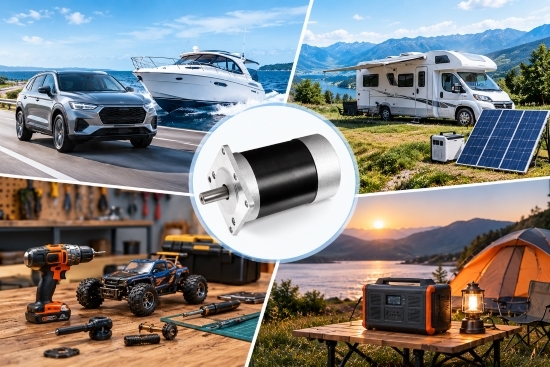
The Real Reason 12V is So Common
12V is the typical voltage for lead-acid batteries found in automobiles, boats, RVs, and many solar systems. For decades, automotive electrical systems have been constructed around 12V batteries, and this standard has spread to a variety of other sectors that use comparable battery infrastructure.
As a result, 12V BLDC motors may often be powered directly from devices that already have conventional 12V batteries, eliminating the need for extra voltage conversion equipment. This compatibility is a major reason why 12V motors remain popular, even as higher-voltage systems become more ubiquitous in other applications.
Common Applications for 12V BLDC Motors
- Automotive and Marine Accessories
Because 12V is the usual voltage for most cars and boats, BLDC motors used in accessories, such as cooling fans, water pumps, or tiny actuators, often run at this voltage in order to integrate seamlessly with existing electrical systems. - RV and Off-Grid Solar Systems
RVs and off-grid solar systems often use 12V battery banks, making 12V BLDC motors an ideal choice for fans, water pumps, and other low-power devices in these systems. - Small Tools for DIY/Hobby Projects
12V is also a popular choice for tiny tools, robotics projects, and hobbyist DIY projects, in part due to the low cost and availability of 12V batteries and power sources. - Camping and Portable Power Devices
Portable gadgets powered by vehicle batteries or tiny 12V power packs frequently employ 12V motors for similar compatibility reasons.
Points to Consider Before Choosing a 12V Motor
While compatibility with existing 12V systems is a major advantage, there are a few points worth noting:
Power Limit: At 12V, achieving higher power output requires a higher current, which means thicker wiring and may generate more heat than a higher-voltage system with the same power output
Torque vs. Speed Trade-off: As with any BLDC motor, specific torque and speed characteristics depend on the motor’s design (including its Kv value), not solely on voltage, so it’s best to review the full specifications rather than assume that 12V automatically means lower performance
System Compatibility: If your project already runs on a 12V battery system, choosing a 12V motor can avoid the added complexity of voltage conversion; if you’re designing a new system from scratch, it may be worth comparing 12V and higher-voltage options based on your power requirements
Frequently Asked Questions
Q1: Are 12V BLDC motors less powerful than 24V or 48V motors?
A1: Not necessarily. Power output depends on the combined effect of voltage and current, as well as the motor's specific design. While a 12V motor can deliver considerable power, achieving higher power levels at lower voltages typically requires a higher current.
Q2: Can I power a 12V Brushless DC motor directly from a car battery?
A2: In many cases, yes. This compatibility is one of the main reasons 12V motors are so popular in automotive and marine applications. However, be sure to verify that the motor’s current draw is within the safe operating limits of your battery and wiring.
Q3: Why not just use higher voltages for all applications?
A3: While higher voltages may be more efficient in high-power applications, they also require different battery systems, wiring configurations and safety considerations. The reason 12V remains practical is precisely because it aligns with existing, widely available battery infrastructure.
Conclusion
The popularity of 12V BLDC motors is largely due to one simple fact: they are compatible with existing battery systems in cars, boats, RVs and solar power setups. If your project runs on a 12V power supply, choosing a motor with the same voltage can greatly simplify your design. If you are building a brand-new system, however, it is worth weighing up this convenience against the power and efficiency differences offered by higher-voltage solutions.


