
Brushless DC (BLDC) motors are highly regarded for their efficiency, durability, and low maintenance requirements. They are widely used in industries such as robotics, electric vehicles and drones. However, like all machines, BLDC electric motors can develop faults over time. When a problem occurs, it is important to troubleshoot the motor quickly to minimise downtime and repair costs. In this blog, we will discuss common BLDC motor faults and provide a step-by-step guide to troubleshooting them.
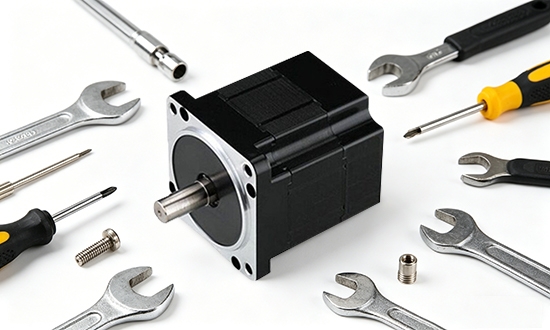
Common Faults in BLDC Motors
The first step in troubleshooting is to understand the common faults that can occur:
|
1. Stator Winding Faults:
|
2. Rotor Faults:
|
|
3. Controller or ESC Failures:
|
4. Power Supply Problems:
|
How to Troubleshoot BLDC Motor Faults
Now that we understand the most common faults, here’s a structured approach to troubleshooting a Brushless DC motor.
1. Visual Inspection
Start with a simple visual inspection.
| Look out for burn marks or discolouration on the motor or controller, as these often indicate overheating. | Loose connections or damaged wiring can result in intermittent power loss or inconsistent performance. | Check the bearings, rotor components and motor casing for any physical damage that may suggest mechanical wear or shock. |
2. Check Power Supply
A faulty power supply is one of the most common causes of motor failure. Ensure that the motor is receiving the correct voltage and current.
| Use a multimeter to measure the input voltage and compare it with the motor’s rated specifications. | If the motor is powered by an ESC or inverter, check the controller’s display for error codes or malfunctions. |
3. Measure Stator Resistance
Use a multimeter to measure the resistance across the stator windings.
| If you detect zero resistance, this may indicate a short circuit in the windings. | Infinite resistance between any two phases, however, indicates an open circuit, which would prevent the motor from functioning properly. | Uneven resistance readings between phases may indicate imbalanced windings or stator damage. |
4. Test Hall Sensors
Many BLDC motors rely on Hall sensors to provide feedback on the rotor's position. Faulty sensors can lead to improper commutation, causing the motor to malfunction or fail to start.
| Use an oscilloscope to check the output of each Hall sensor. The signals should correspond to the rotor’s position. | If one or more sensors are not producing the correct output, they may need replacing. |
5. Evaluate Motor Speed and Torque
If the motor is running but not performing as expected, you will need to assess its speed and torque.
| Use a tachometer to measure the motor’s speed and compare it to the rated speed. | If the speed is too low or inconsistent, this could indicate issues with the stator, rotor or controller. | Similarly, if the motor produces low torque, this could be due to a loss of magnetism in the rotor or an electrical problem in the stator windings. |
6. Test the ESC (Electronic Speed Controller)
If the motor appears to be functioning mechanically but is not operating correctly, the ESC may be the issue.
| Inspect the ESC for any error codes or warning lights, as these can indicate an internal fault. | Check the cooling system of the ESC, as overheating can lead to thermal shutdown or permanent failure. | Replace the ESC with a working unit to determine whether the problem is isolated to the controller. |
7. Thermal Testing
Excessive heat is a key indicator of faults. Use a thermal camera or infrared thermometer to check the following.
| The temperature of the motor windings, bearings, and ESC. | Hot spots may indicate areas where the motor or ESC is overheating due to short circuits or malfunctioning components. |
8. Vibration Analysis
Sometimes, mechanical issues such as bearing wear or rotor imbalance can cause vibrations that affect performance. You can use a vibration analyser or simply listen out for any unusual noises during operation.
- Excessive noise or vibrations may indicate misalignment of the motor, worn bearings, or damage to the rotor.
When to Seek Professional Help
If you have gone through these troubleshooting steps and the motor is still not functioning correctly, it may be time to seek professional help.
- Faults related to the rotor magnets or internal motor components often require specialised equipment and expertise.
- An experienced technician can carry out in-depth diagnostics, such as testing the controller’s pulse width modulation (PWM) signals or replacing faulty components.
Preventive Measures to Avoid Future Faults
Regular maintenance is essential for ensuring the long-term performance of BLDC motors.
- Inspect the wiring and connections regularly to prevent intermittent issues.
- Make sure that the motor and ESC are adequately ventilated and cooled to prevent overheating.
- Lubricate mechanical components, such as bearings, to prevent wear and tear.
- Monitor the power supply for consistency and stability.
Conclusion
Troubleshooting BLDC electric motor faults requires a systematic approach. This should start with a visual inspection, followed by electrical and mechanical checks. Identifying the root cause of the problem, whether electrical, mechanical or controller-related, enables you to resolve most issues effectively. Regular preventive maintenance can help to extend the lifespan of your motor and prevent future failures.
Following these steps will help to ensure that your Brushless DC motor stays in optimal working condition, thereby minimising downtime and repair costs.


