
Electric utility carts are widely used in factories, warehouses, industrial facilities, and outdoor work areas to transport materials, tools, and equipment over short distances. Their drive systems need to provide sufficient torque for starting and carrying loads while maintaining a suitable travel speed.
A 36V BLDC motor can be a suitable drive option for light-duty electric utility carts. However, choosing the right brushless DC motor involves more than matching the battery voltage. Motor power, torque, operating speed, gearbox configuration, and controller compatibility all affect the performance of the vehicle.
In this article, we'll look at how 36V BLDC motors are used in electric utility carts and what to consider when selecting a BLDC motor for your application.
What is an Electric Utility Cart?
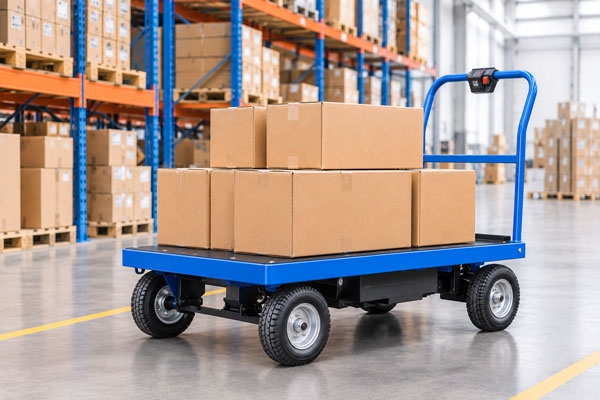
An electric utility cart is a battery-powered vehicle designed for short-distance transportation of goods, tools, or equipment. Unlike passenger vehicles, these carts are primarily built for material handling and general-purpose transportation.
Common types include:
- Electric Flatbed Carts: Used in factories and warehouses to move components, packages, and other materials.
- Warehouse Transport Carts: Designed for moving goods between storage areas, production lines, and loading zones.
- Electric Maintenance Carts: Used by maintenance teams to transport tools and equipment around industrial facilities.
- Light-Duty Tow Carts: Used to pull small trailers or material carts over relatively short distances.
These vehicles may operate on smooth factory floors, warehouse surfaces, or outdoor paths. Their motor requirements vary depending on vehicle weight, payload, travel speed, and operating conditions.
What Should You Consider When Choosing a 36V BLDC Motor?
Before selecting a BLDC motor, evaluate the vehicle's operating requirements rather than choosing one based on voltage alone.
Motor Power and Load Requirements
Motor power determines the rate at which the motor performs mechanical work. Required power depends on total vehicle weight, payload, desired travel speed, terrain, and acceleration needs.
For example:
- A compact utility cart carrying light loads may need a lower-power motor.
- A warehouse transport cart carrying heavier materials may require a higher-power motor.
- A cart operating on slopes or starting frequently under load may need additional drive capacity.
A higher power rating does not automatically mean a motor is suitable for every vehicle. Select the BLDC electric motor based on the actual driving conditions.
Torque and Starting Requirements
Torque is particularly important for electric utility carts because the motor needs to overcome the vehicle's resistance when starting and moving under load.
Consider the following factors:
- Total vehicle weight, including the payload
- Wheel diameter
- Required acceleration
- Road or floor conditions
- Slope and climbing requirements
If the BLDC motor's rated speed exceeds the required wheel speed, a gearbox can reduce output speed while increasing available torque.
Operating Speed
The required motor speed depends on the cart's target travel speed and drivetrain design. Many standard BLDC motors have rated speeds of around 3,000 RPM, while the drive wheels of an electric utility cart typically operate at much lower speeds.
A gearbox can help match the motor speed to the vehicle's driving requirements. The appropriate reduction ratio depends on wheel diameter, target vehicle speed, and required torque.
Gearbox Configuration
A gearless BLDC motor may be suitable when its speed and torque meet the drive system requirements. However, a geared BLDC motor is often worth considering when lower output speeds and higher wheel torque are required.
Two common options are:
- Worm Gearbox: Suitable for applications requiring speed reduction and increased output torque in a compact drive system.
- Planetary Gearbox: Suitable for applications requiring a compact reduction system with higher torque transmission capacity.
The gearbox ratio, efficiency, and mechanical installation should be considered when selecting the complete drive system.
Motor Controller Compatibility
The motor controller is another important part of the drive system.
When matching a 36V BLDC motor with a controller, check:
- Rated operating voltage
- Continuous and peak current requirements
- Hall sensor compatibility, if applicable
- Speed control method
- Forward and reverse control
- Protection functions
The motor controller must be compatible with both the motor and the battery system. Its current rating should be sufficient to handle the motor's continuous and peak current demands. The battery's nominal voltage, operating voltage range, and discharge capability should also be checked to ensure adequate power supply.
Which 36V BLDC Motor is Suitable for Your Electric Utility Cart?
Different electric utility carts have different power and torque requirements. Here are three 36V BLDC motor options from BLDC.com that can be considered for different light-duty drive systems.
Note: The following motor options are reference configurations. The actual motor selection depends on vehicle weight, payload, wheel diameter, target speed, gearbox ratio, and operating conditions.
600W 36V BLDC Motor – For Compact Utility Carts
The 600W BLDC motor is a potential option for compact electric utility carts with relatively light loads and moderate driving requirements.
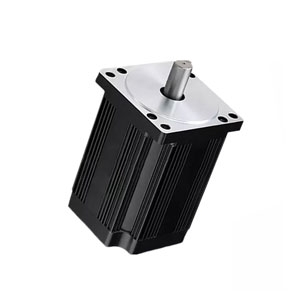
| Model | BLDC-D110BLD600 |
| Rated Power | 600W |
| Rated Voltage | 36V DC |
| Rated Current | 20.83A |
| Rated Torque | 1.91 Nm |
| Rated Speed | 3000 rpm |
| Working Efficiency | 85% |
| Protection Grade | IP54 |
This BLDC motor supports optional worm or planetary gearboxes, allowing the output speed and torque to be adapted to different drive configurations. It can be considered for small warehouse transport carts, maintenance carts, and other compact electric vehicles, provided the required output torque and power are within the system's capabilities.
1000W 36V BLDC Motor – For General-Purpose Utility Carts
For utility carts with greater load and driving requirements, a 1000W BLDC motor is another option.
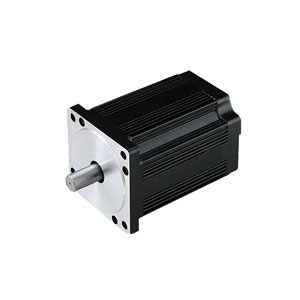
| Model | BLDC-D110BLD1000 |
| Rated Power | 1000W |
| Rated Voltage | 36V DC |
| Rated Current | 34.72A |
| Rated Torque | 3.18 Nm |
| Rated Speed | 3000 rpm |
| Working Efficiency | 85% |
| Protection Grade | IP54 |
This is a sensored BLDC motor with Hall sensors for speed feedback. It supports optional worm or planetary gearboxes and an electromagnetic brake. For electric utility carts, the gearbox can help match the motor's high operating speed to the lower speed required at the drive wheels. The optional brake can also be considered when required by the vehicle's braking system. This BLDC motor can be considered for factory transport carts, warehouse vehicles, and light-duty material handling equipment.
1500W 36V BLDC Motor – For Higher-Power Drive Requirements
For applications requiring more motor power, the 1500W BLDC motor provides another configuration to consider.
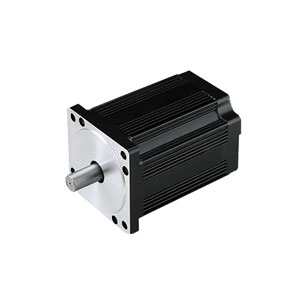
| Model | BLDC-D110BLD1500 |
| Rated Power | 1500W |
| Rated Voltage | 36V DC |
| Rated Current | 52.08A |
| Rated Torque | 4.78 Nm |
| Rated Speed | 3000 rpm |
| Working Efficiency | 85% |
| Protection Grade | IP54 |
The BLDC motor supports optional worm and planetary gearboxes, as well as an electromagnetic brake. Its higher rated power and torque make it worth considering for utility carts with more demanding drive requirements. However, the vehicle's battery, controller, gearbox, and drivetrain must all be designed to support the required operating conditions.
Comparison of the Three BLDC Motors
| Parameter | 600W | 1000W | 1500W |
| Rated Voltage | 36V | 36V | 36V |
| Rated Current | 20.83A | 34.72A | 52.08A |
| Rated Torque | 1.91 Nm | 3.18 Nm | 4.78 Nm |
| Maximum Torque | 5.73 Nm | 9.55 Nm | 14.33 Nm |
| Rated Speed | 3000 rpm | 3000 rpm | 3000 rpm |
| Gearbox Options | Worm / Planetary | Worm / Planetary | Worm / Planetary |
| Brake Option | Available | Available | Available |
The 600W model can be considered for compact, lighter-duty carts, while the 1000W and 1500W models provide options for applications with higher power and torque requirements. These are preliminary motor selection references, not fixed vehicle load ratings. The final choice should be based on the required wheel torque, reduction ratio, vehicle weight, and operating conditions.
Can a 36V BLDC Motor Be Customized for an Electric Utility Cart?
Standard BLDC motors may not always match the installation space or drive requirements of a particular utility cart.
Depending on the application, motor configurations can be adjusted to meet different design requirements, including:
- Voltage and Power: Select a suitable motor rating for the battery and drive system.
- Speed and Gear Ratio: Match the motor and gearbox to the required vehicle speed.
- Shaft Design: Adjust shaft dimensions and configurations for mechanical installation.
- Mounting Dimensions: Match the motor flange and mounting arrangement to the vehicle.
- Brake Configuration: Add an electromagnetic brake when required by the drive system.
At BLDC.com, we offer standard and customized BLDC motor solutions, including 600W, 1000W, and 1500W motors with 36V options.
Whether you need a gearless motor or a geared BLDC motor with a worm or planetary gearbox, contact us with your application requirements to discuss a suitable motor configuration.
Frequently Asked Questions
Q1: What power BLDC motor is suitable for an electric utility cart?
A1: The required motor power depends on the vehicle's total weight, payload, target speed, terrain, and acceleration requirements. Motors in the 600W–1500W range can be considered for different light-duty utility cart designs, but the final rating should be determined through drive system calculations.
Q2: Is a gearbox necessary for an electric utility cart?
A2: Not always. However, many utility carts require lower wheel speeds and higher output torque than a standard high-speed BLDC motor can provide directly. A gearbox can help achieve the required speed and torque.
Q3: Can a 36V BLDC motor run on a 48V battery?
A3: Only if the motor and controller are both rated for the higher operating voltage. A 36V-only configuration should not be connected directly to a 48V battery without checking the manufacturer's voltage specifications.
Q4: What motor controller is needed for a 36V BLDC motor?
A4: Choose a motor controller compatible with the motor's rated voltage, continuous and peak current, and feedback type. The motor controller should also support the required speed and direction control functions.
Q5: Can BLDC.com provide customized motors for electric utility carts?
A5: Yes. BLDC.com provides standard and customized BLDC motors for electric utility carts. Customization options include voltage, power, shaft dimensions, mounting dimensions, gearbox, and brake configurations, depending on the motor model.


