
24V BLDC motors are widely used in electric vehicles, AGVs (Automated Guided Vehicles), mobile robots, water pumps, fans, and battery-powered equipment. However, although both 50W and 1000W brushless motors fall under the category of 24V BLDC motors, their suitable applications differ significantly. Selecting the appropriate power rating depends primarily on the load, required speed, starting conditions, and the specific mode of operation.
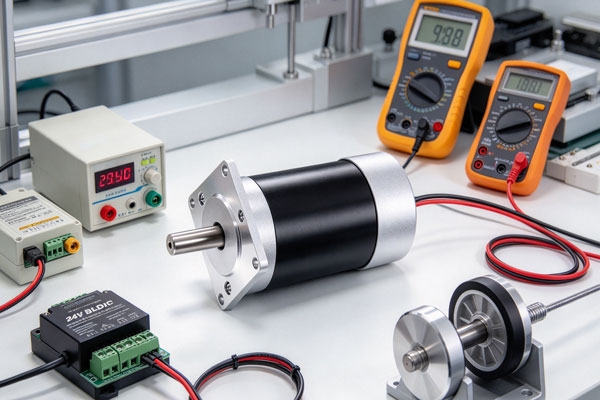
Different Power Ratings for Different Applications
A simple way to narrow down your selection is to start with the specific application scenario. Different applications have different motor power requirements, so identifying where and how the BLDC electric motor will be used can help narrow down the suitable power rating.
50W-100W: Suitable for Light Loads
A 50W or 100W 24V BLDC motor is an ideal choice when the application does not require high output torque. Typical applications include:
- Small fans and blowers
- Small water pumps
- Automation equipment
- Compact drive mechanisms
- Small battery-powered devices
For these applications, using a low-power motor helps keep the motor and controller compact in size.
200W-500W: Suitable for Medium Loads
BLDC motors in the 200W-500W range should be considered when the equipment requires higher torque or operates under heavier loads. Common applications include:
- AGVs
- Mobile robots
- Small electric vehicles
- Conveyors
- Water pumps
- Automation machinery
For mobile equipment, power rating is not the only factor to consider. Wheel size, vehicle weight, travel speed, and acceleration requirements all significantly influence motor selection.
750W-1000W: Suitable for Heavy Loads
750W or 1000W 24V BLDC motors are typically used when the application requires significantly higher mechanical output. Typical applications include:
- Electric transport carts
- Multi-functional utility vehicles
- Heavy-duty AGVs
- Mobile robots
- Material handling equipment
- Battery-powered drive systems
At a voltage of 24V, a 1000W brushless DC motor requires the power source to supply relatively high current. Therefore, the selection of batteries, cables, connectors, and controllers must be based on the motor's operating current and peak current. Consider the starting load.
Consider Starting Torque
The torque required during startup can be higher than the torque needed during normal operation. This is especially important for applications such as AGVs starting from a standstill, electric carts carrying loads, conveyor systems, pumps starting against pressure, and machinery that requires frequent acceleration.
A 24V BLDC motor may provide sufficient power for continuous operation but still have difficulty starting or accelerating if the available starting torque is not sufficient. Therefore, when selecting a motor, consider not only the power rating but also the starting torque required by the application.
Consider Speed before Choosing Power
Brushless DC motors with the same rated power can be used in different applications, yet the required motor speed may vary significantly. For instance, direct-drive applications might require higher motor speeds, whereas wheel-hub drives or conveyor systems may require lower output speeds and higher torque.
If a low output speed is required, a 24V BLDC motor can be paired with a gearbox. Consider a worm gear reducer for a compact reduction system, or a planetary gearbox if a high reduction ratio and compact footprint are needed.
Don't Ignore the Duty Cycle
Requirements differ vastly between 24V BLDC motors used for short-duration operation and those used for continuous operation. Determine whether the motor will:
- Operate continuously
- Start and stop frequently
- Operate under variable loads
- Run under high loads for extended periods
- Operate in high-temperature environments
For continuous-operation applications, factors such as rated power, current, heat dissipation, and temperature rise must be comprehensively evaluated.
Match the Controller to the Motor
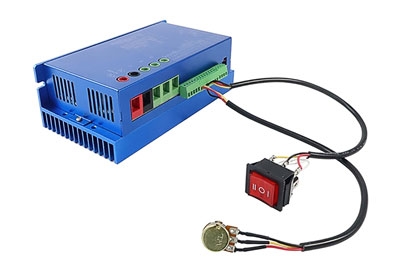 The controller is a critical component of a 24V BLDC motor system. When selecting a motor controller, check the following parameters:
- 24V operating voltage
- Continuous current
- Peak current
- Hall sensor compatibility
- Speed control requirements
- Protection features
For example, a 24V 1000W BLDC motor may require a motor controller capable of handling high operating currents. Do not select a controller based solely on the 1000W nominal power rating.
Final Considerations
When selecting a 24V brushless DC motor, do not determine the rated power based solely on the application name. For instance, two AGVs might require motors of different power ratings due to differences in vehicle weight, wheel diameter, operating speed, and load.
Before selecting a BLDC motor, clarify the required motor power, operating speed, starting torque, maximum load, duty cycle, available battery capacity, controller requirements, and whether a gearbox is needed.
BLDC.com offers a range of 24V BLDC motors for different power, load, and speed requirements. If you need a custom BLDC motor, contact us to discuss your application and motor requirements.


